
How to Exercise Consistently: 7 Gentle Ways to Make Exercise a Habit
This post is all about how to exercise consistently.

We all know that feeling. You decide it’s time to take better care of yourself, choose a workout program, perhaps even buy a new pair of leggings, and promise that this time things will be different.
For the first few days, everything goes beautifully. You exercise in the morning, drink more water, stretch before bed, and feel rather pleased with your new routine.
And then life happens.
Work gets busy, the house needs attention, you sleep badly, or you simply don’t feel like exercising. One missed workout becomes three, and before you know it, your new healthy habit has quietly disappeared.
If this sounds familiar, I have some good news: you don’t necessarily need more discipline or another burst of motivation. You may simply need a gentler approach.
Learning how to exercise consistently doesn’t have to mean pushing yourself harder, finding an extra hour every day, or turning exercise into another obligation. It can begin with a few small changes that make movement easier to return to.
And the lovely thing about exercising at home is that you can create a routine around your own lifestyle, without commuting to a gym or investing in an expensive membership.
Here are seven ways to make exercise a habit without forcing yourself into a routine you cannot maintain.
1. Stop Waiting for Motivation to Work Out
Motivation is great when it arrives. You wake up feeling energetic, put on your favorite workout clothes, and can’t wait to move your body.
The trouble is that motivation isn’t particularly reliable.
Some mornings you feel wonderful. On others, you barely want to get out of bed. You might have a demanding week at work, family responsibilities, a poor night’s sleep, or simply one of those days when everything feels like too much.
If your exercise routine depends on feeling inspired, it will inevitably become inconsistent.
Instead of asking yourself whether you’re motivated enough to work out today, try making movement a small, familiar part of your day. You don’t need to feel excited about every session. You just need to make it easy enough to begin.
And remember, a workout doesn’t have to be impressive to count. A little stretching, a short walk, or a few minutes of gentle movement can be a perfectly reasonable way to stay connected to your routine.
The goal isn’t to feel motivated every day. It’s to create a routine you can return to even when motivation is nowhere to be found.
2. Start Smaller Than You Think You Should
One of the biggest mistakes we make when introducing a new habit is trying to change too much at once.
We decide to exercise for an hour every morning, stretch every evening, and completely reorganise our schedules. It’s an ambitious plan, but it can quickly become exhausting.
When a new routine requires a great deal of time and energy, it becomes much easier to postpone it.
A gentler approach is to start with something almost ridiculously simple.
For example:
- Stretch for five minutes after getting out of bed.
- Do a short mobility routine before your morning shower.
- Put on your favourite song and dance around the living room.
- Take a ten-minute walk after lunch in the office.
- Spend a few minutes gently moving your shoulders and opening your chest after sitting at your desk.
You don’t need special equipment to start exercising at home, either. Your own body weight, a comfortable mat, and a little space can be enough for many beginner-friendly activities.
You might feel that these activities are too small to make a difference. But remember, you’re not trying to achieve your ultimate fitness goal in the first week. You’re learning to make movement part of your everyday life.
Once a small routine feels familiar, you can gradually add a little more time or intensity.
And here’s something worth remembering: you don’t have to turn every short session into a full workout. Sometimes five minutes is exactly what you have available, and that’s perfectly fine.
3. Attach Your Workout to a Habit You Already Have
Here’s a little trick that can make starting much easier: connect your new exercise habit to something you already do regularly.
Think about your typical day. You probably have several activities that happen almost automatically: brushing your teeth, making coffee, taking a shower, preparing dinner, or getting ready for bed.
These familiar routines can become natural reminders to move.
For example:
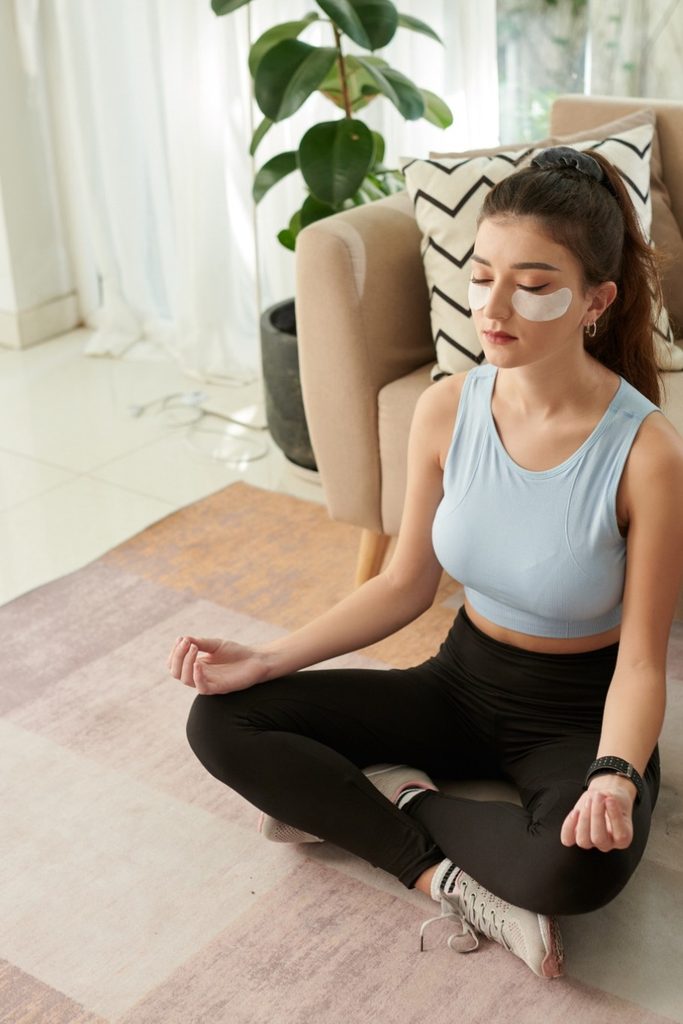
- After brushing your teeth, spend five minutes stretching while you have eye patches on.
- While your morning coffee is brewing, do a few gentle mobility exercises right in the kitchen.
- After finishing work, change into comfortable clothes and do a short workout.
- Before your evening skincare routine, take a few minutes to do breathing exercises.
- After dinner, go for a short walk.
The idea is simple: instead of finding a completely new place for exercise in your schedule, give it a place next to something that already belongs there.
This can be particularly helpful if you have a busy household or struggle to remember your intentions throughout the day.
Your existing routine becomes a little reminder that it’s time to move, without having to negotiate with yourself every morning.
4. How To Make Exercise Fun At Home
Let’s be honest: if your workout feels like a punishment, you’re unlikely to look forward to doing it again tomorrow.
We often approach exercise as something we must endure to achieve a particular result. We focus on how many calories we burn, how much time we spend exercising, or how quickly we can change our appearance.
But movement can offer much more than that.
It can be a chance to reconnect with your body, release some tension, enjoy your favourite music, and have a little time that belongs entirely to you.
So why not make the experience more pleasant?
You could:
- Choose comfortable workout clothes that make you feel good.
- Try a new fitness program from an online trainer you particularly like.
- Put on music you genuinely enjoy.
- Open the curtains and let some natural light into the room.
- Create a little space at home where you can move without interruptions.
- Choose activities you actually like rather than copying someone else’s routine.
- Keep your mat or exercise equipment somewhere accessible.
You don’t need an elaborate home gym or an expensive fitness membership to create a pleasant exercise ritual.
Sometimes, a little space, comfortable clothes, and your favourite playlist are enough to make you want to begin.
And don’t be afraid to experiment. Perhaps you enjoy Pilates, dancing, stretching, strength training, or a combination of different activities. The best routine isn’t necessarily the most impressive one. It’s the one you genuinely enjoy returning to.
5. Stop Putting Yourself Last
Loving yourself isn’t a thought, a beautiful affirmation, or simply saying kind things to yourself. It’s an act.
It’s when you:
- Prepare a relaxing Epsom salt bath with fragrances you enjoy.
- Put your phone away for a while.
- Lie down on your yoga mat and spend five minutes gently stretching.
How often do you postpone doing something for yourself because there’s always something else to take care of?
You need to finish the laundry, prepare dinner, answer a few emails, help someone with something, or tidy the house. And once everything is finally done, you’re too tired to exercise.
The problem is that everything is rarely done.
There will almost always be another task waiting for you. If you only allow yourself time for exercise after everyone else’s needs have been met, your own well-being will keep moving to the bottom of the list.
It’s time to change that arrangement.
Choose a realistic time for your movement routine and treat it as a date with yourself. It doesn’t have to be an hour. Even twenty minutes can give you a little space to focus on your body without thinking about everything else.
If you live with family or a partner, let them know that this time matters to you. Explain when you’d like to exercise and ask them to respect that little window.
You might be surprised how much easier it becomes when you stop treating your personal time as something you have to squeeze into the day.
Taking care of yourself isn’t something you need to earn by finishing every other responsibility on Earth.
Making time for your well-being is one of the ways you honor your feminine nature. You cannot nurture everyone around you while constantly neglecting yourself.
6. Come Back to Yourself by Prioritising Your Body’s Needs

Consistency doesn’t mean doing the same workout at the same intensity every single day.
Your energy levels can change depending on how well you’ve slept, how demanding your day has been, how much stress you’re experiencing, and where you are in your menstrual cycle. There are many factors that influence how you feel in your body.
Some days you might feel ready for a proper strength workout. On others, a gentle stretching session, a quiet walk, or a breathing exercise on the mat may be a better choice.
One reason exercise routines become difficult to maintain is that we sometimes treat them as rigid rules. We decide what we should do and then feel guilty when our bodies don’t cooperate.
Now, it’s absolutely great if, in moments of anger or distress, you’re able to complete an intense strength workout and release that negative energy. If you’re at that level of connection with your body, I congratulate you wholeheartedly!
However, please rest assured that it’s perfectly normal to feel exactly the opposite way. If you’re really upset about something, or starting to spiral, choose the lightest form of exercise available, such as breathing exercises. You’ll see that they can do wonders for you without requiring you to sacrifice too much of the energy you already have depleted.
You can consider the following options.
When you have plenty of energy:
- Complete your planned workout.
- Try a strength or resistance session.
- Spend more time on flexibility and mobility.
When you’re feeling a little tired:
- Choose a shorter workout or reduce your usual training session. Instead of doing three rounds with weights, try one round with lighter weights or your own body weight.
- Go for a gentle or brisk walk.
- Do some light stretching.
When you’re exhausted or unwell:
- Give yourself permission to rest, eat, watch a movie, and recharge.
- Return to your routine when you’re feeling better.
It’s true that sometimes, you simply need to lie down on the couch, put on your favorite show, ask your husband to order pizza, and postpone the household chores until later.

When your body is nourished and your needs are taken care of, you have more energy to give to the world around you.
Rest is not a failure of consistency. It’s part of having a routine that respects your actual needs.
The point is to build a relationship with movement that feels supportive, not another reason to criticise yourself.
7. Celebrate Consistency, Not Perfection
Perhaps the most important thing to understand about building a habit is that you don’t have to do it perfectly.
You will miss workouts. You’ll have busy weeks, unexpected responsibilities, holidays, and mornings when you’d rather stay in bed.
That doesn’t mean you’ve failed.
One or a few missed sessions doesn’t erase everything you’ve done before. And you don’t need to wait until Monday, the beginning of a new month, or the next New Year to start again.
Simply return to your routine when you can.
It can also help to notice the small things you’re doing well. Perhaps you stretched three mornings this week instead of none. Maybe you went for a walk after work twice, or finally found a type of exercise you enjoy.
These little wins deserve recognition.
Rather than constantly measuring yourself against an ideal version of your routine, pay attention to the progress you’re actually making.
Every small act of self-care is a reminder that you matter. The way you treat your body is one of the ways you show yourself how much you care.
A Little Reminder: You Don’t Have to Force Yourself to Become a Different Woman
Self-care isn’t selfish. It’s a necessity.
Without taking care of ourselves, we can become irritable, nervous, stressed, and emotionally closed off. It’s much harder to feel soft, open, and at peace when we’re constantly running on empty.
We often approach self-improvement as though we need to become an entirely different person.
A more disciplined woman. A more organised woman. A woman who wakes up at five in the morning, exercises for an hour, prepares a beautiful breakfast, and somehow manages to have everything under control.
But real life doesn’t always look like that.
You can be a woman who enjoys slow mornings, has a busy schedule, occasionally feels tired, and still takes wonderful care of herself.
You don’t need to compete with someone else’s routine or measure your progress against what you see on social media. Your body, your circumstances, and your daily rhythm are your own.
Start with a little movement. Find activities that make you feel good. Give yourself time, and allow your routine to grow naturally.
Most importantly, stop treating exercise as another obligation you have to fulfil.
Let it become a little ritual of self-care, a date with your beautiful feminine self.
Because the purpose of a healthy routine isn’t to make your life more demanding. It’s to help you feel more at home in your body, wherever you are, and more connected to yourself.